Reading list
Hearing loss advice for Southend-on-Sea
Every guide on this site, gathered in one place. Read about what happens during an appointment, why ears block after a cold, how wax removal works, and when to book a hearing test near your home.

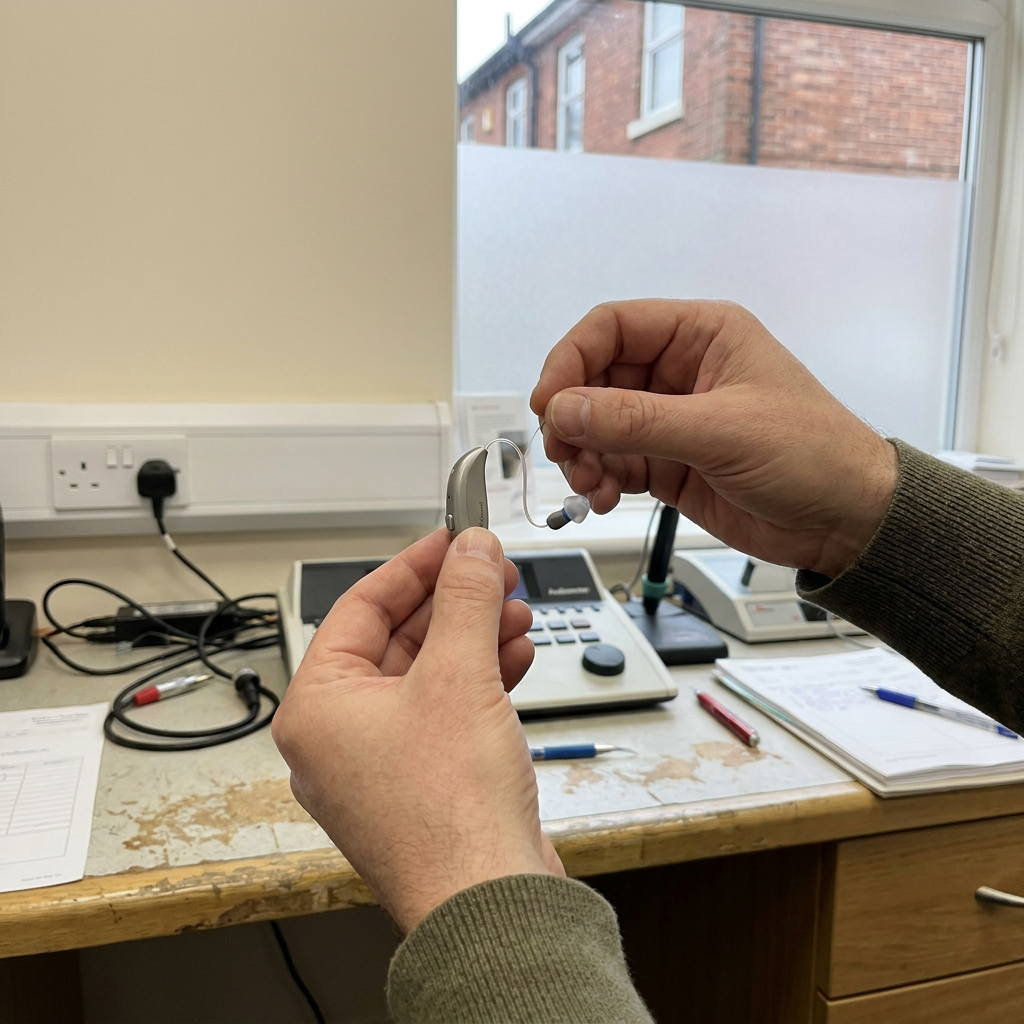
What happens at a hearing test appointment
A hearing test checks how well you hear different pitches and volumes. The audiologist plays sounds through headphones and records which ones you catch and which you miss. The results show whether your hearing sits within the normal range or if some frequencies have dropped off.
If you want to know exactly what the appointment involves before you go, read the full breakdown of a [hearing test in Southend-on-Sea](/hearing-tests-southend-on-sea). It covers the questions the audiologist asks, the equipment used, and how long each part takes.
The same process applies whether you live in Leigh-on-Sea, Shoeburyness or Eastwood. Local clinics run identical checks, so the results are comparable wherever you book. You can read about [hearing tests in Leigh-on-Sea](/southend/leigh-on-sea), [hearing tests in Shoeburyness](/southend/shoeburyness) or [hearing tests in Eastwood](/southend/eastwood) to see what each area offers.
When to get your hearing checked
Hearing loss rarely announces itself. You might notice you ask people to repeat themselves, or that the television volume creeps up over a few months. Sometimes the first sign is struggling to follow speech in a noisy room rather than silence at home.
If you are unsure whether your symptoms warrant an appointment, the guide on [signs you need a hearing test](/ears-playing-up/do-i-need-a-hearing-test-southend-on-sea) lists the changes people tend to dismiss until they become hard to ignore. Ringing in the ears, known as tinnitus, is another common reason people finally book in. Read about [ringing in the ears and when to check it](/ears-playing-up/ringing-in-ears) to understand what causes it and whether it points to hearing damage.
Difficulty following conversations in busy pubs is a specific problem many people face without realising it relates to hearing. There is a separate piece on [struggling to hear in noisy pubs](/ears-playing-up/cant-hear-in-noisy-pubs) that explains why background noise masks speech for someone with early hearing loss.
Ear wax and blocked ears
Wax build-up can mimic hearing loss. A blocked ear muffles sound just as effectively as nerve damage, but the fix is entirely different. If your ear feels full after a cold, the cause might be fluid behind the eardrum rather than wax. The guide on a [blocked ear after a cold](/ears-playing-up/blocked-ear-after-a-cold) explains why this happens and what usually clears it.
When wax is the problem, specialist firms offer microsuction or syringing to remove it safely. Read about [ear wax removal in Southend-on-Sea](/ear-wax-removal-southend-on-sea) to understand both methods and what to expect on the day. Preparation matters too. Softening the wax beforehand makes the appointment quicker and more comfortable. The advice on [softening ear wax before your appointment](/ears-playing-up/softening-ear-wax-before-your-appointment) covers which drops work and how many days ahead to start using them.
Many people try to clean their own ears with cotton buds, which pushes wax deeper against the eardrum. The piece on [cotton buds and ear wax](/insights/cotton-buds-and-ear-wax-why-cleaning-can-backfire) explains why this habit causes more problems than it solves.
Hearing aids and treatment options
If a test shows hearing loss, the next step is often a hearing aid. Modern devices come in several styles, from tiny units that sit inside the ear canal to larger models that hook over the top. An audiologist recommends a type based on the shape of your hearing loss and how you use your hands.
The overview of [hearing aids in Southend-on-Sea](/hearing-aids-southend-on-sea) covers the main types available and how the fitting process works. For residents closer to Leigh-on-Sea, there is specific guidance on [hearing aids in Leigh-on-Sea](/hearing-aids-leigh-on-sea) that addresses local fitting appointments.
One practical decision is power source. Some hearing aids take disposable batteries while others charge overnight like a phone. The comparison of [hearing aid batteries versus rechargeable](/insights/hearing-aid-batteries-or-rechargeable-which-to-pick) sets out the running costs and daily handling differences. People also want to know whether lost hearing can return. The article on [whether hearing loss can be reversed](/insights/can-hearing-loss-be-reversed-what-treatment-can-do) separates temporary conditions from permanent changes and explains what treatment actually achieves.
Living with hearing changes
Hearing loss affects daily routines beyond conversation. Safety at home depends on hearing smoke alarms, doorbells and timers. If those sounds fade, the risk increases without obvious warning signs. The guide on [hearing loss and safety at home](/insights/hearing-loss-and-safety-at-home-alarms-and-doorbells) suggests practical adjustments such as vibrating pads and flashing alert systems.
Driving relies on sound too. Sirens, horns and the noise of tyres on wet roads give information that mirrors cannot. Read about [hearing loss and driving](/insights/hearing-loss-and-driving-sounds-that-matter-on-the-road) to understand which sounds matter most and what the rules say about reporting changes to the DVLA.
Infections can also alter hearing temporarily or permanently. The piece on [ear infections and hearing loss](/insights/ear-infections-and-hearing-loss-what-usually-happens) explains what typically follows a bad infection and when further investigation is needed. For broader context, the [audiologist guide for Southend-on-Sea](/audiologist-southend-on-sea) details what these specialists check and when a referral to one makes sense.
Ask about a hearing test in Southend
Send an enquiry and a specialist firm will reply with available dates. Submitting this form does not commit you to an appointment or a purchase.
- No obligation to book
- Local specialist firms
- Plain answers
Hearing loss advice
- Hearing test signs
Signs you need a hearing test include turning the TV up, asking people to repeat themselves and struggling in noisy rooms. Here is what to check.
- Ringing in ears
Ringing in ears causes range from ear wax and noise exposure to ear infections and tinnitus. Read what each one feels like and when a hearing check helps.
- Blocked ear
A blocked ear after a cold is often fluid or wax behind the eardrum. Find out what eases it, how long it usually lasts and when to get it checked.
- Softening ear wax
How to soften ear wax before removal: which drops and oils to use, how many days to use them for and what to avoid putting in your ear.
- Noisy places
Not being able to hear speech in noisy places like pubs often points to early hearing loss, background noise or wax. Find out what a hearing test shows.
- Hearing loss info
Clear hearing loss information for Southend-on-Sea: how hearing changes, what wax, noise and age can do, and when a hearing test is worth booking.