Local guide
Signs you need a hearing test in Southend-on-Sea
Noticing changes at home, like asking people to repeat themselves or turning the television up higher than usual, often prompts the question of whether a check is needed. Find out what those everyday signs you need a hearing test mean, and how to arrange one in Southend-on-Sea.
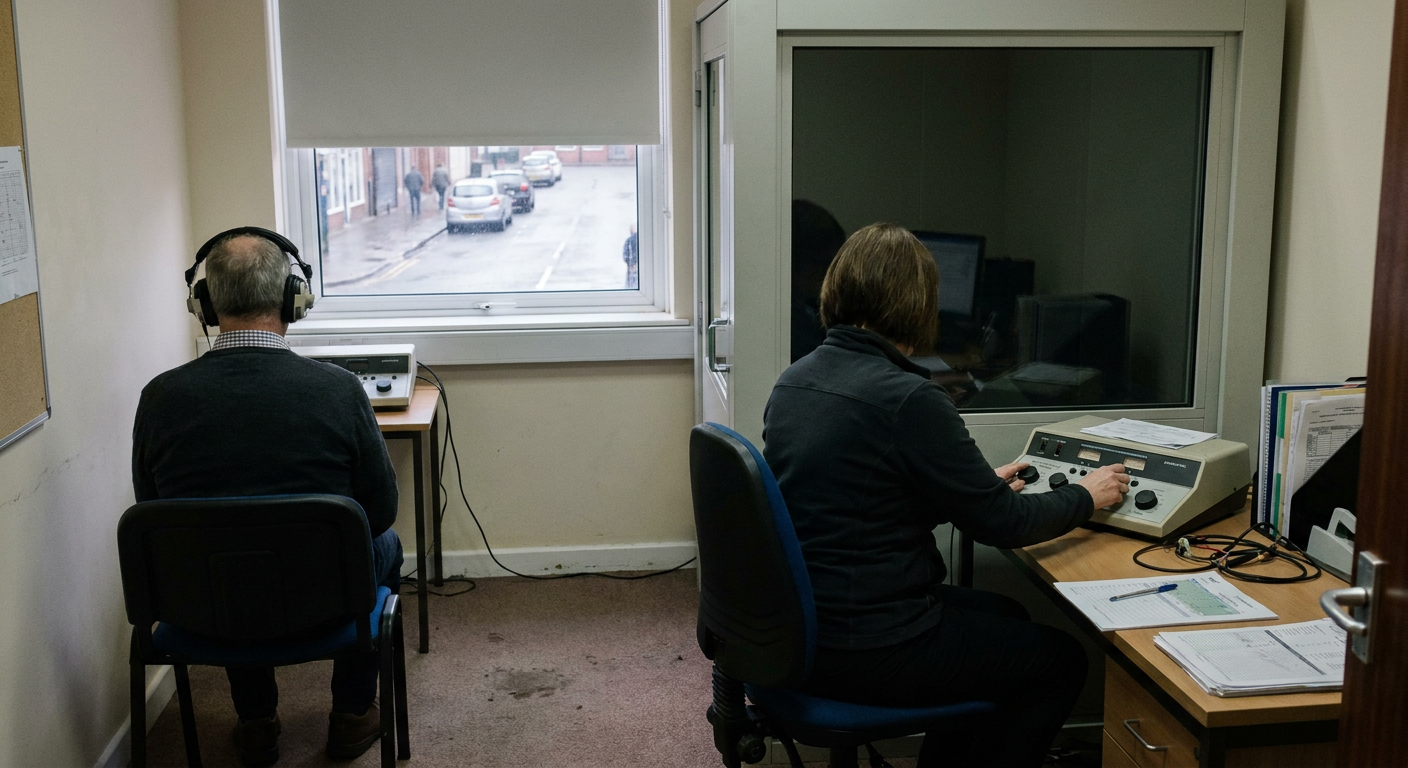
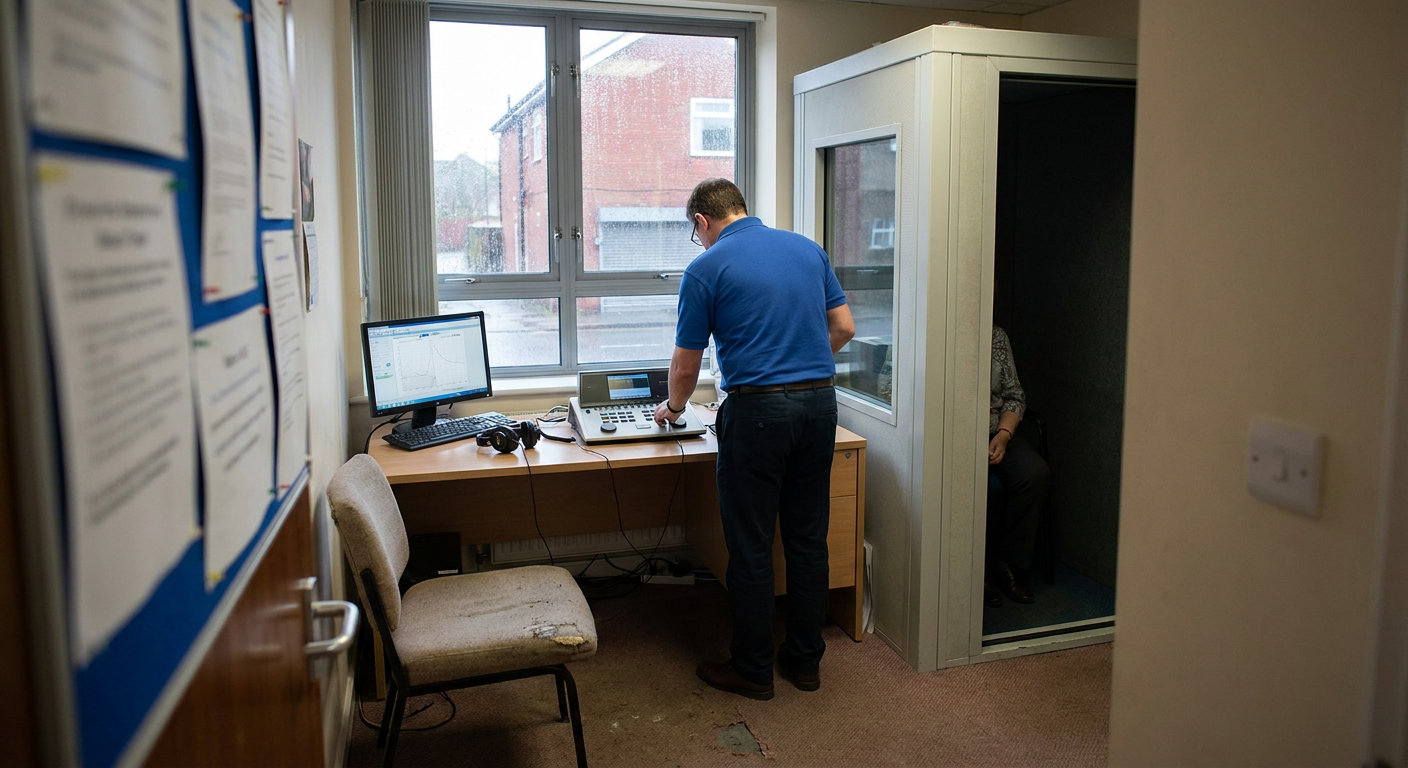
Everyday moments that change first
The signs you need a hearing test rarely arrive all at once. They start as small shifts in daily life around your home. You find yourself asking people to repeat themselves more often, especially when the television is on or someone speaks from another room. Conversations feel harder to follow than they used to.
These early signs of hearing loss tend to be things other people notice before you do. A partner might mention the volume on the television has crept up over the weeks. You may not hear the doorbell ring until someone else opens the door. Missing these sounds does not mean something serious is wrong, but it is a reason to check rather than guess.
If you are wondering whether you should get hearing tested, the simplest measure is whether you have started changing your habits. Turning the volume higher, leaning closer to listen, or avoiding busy rooms because speech gets lost in background noise are all reasons to ask an audiologist in Southend-on-Sea for an appointment.
When the television sounds fine to you
A common disagreement in homes across Southend-on-Sea is the volume of the television. Your family says it is too loud. To you, it sounds perfectly normal. Neither side is being difficult. The person sitting closest to the screen hears it differently from someone across the room, and hearing ability varies between individuals.
When the television is too loud for others but comfortable for you, it usually means your ears require more volume to process speech clearly. This does not automatically point to permanent damage. It does suggest your hearing has shifted enough that a baseline measurement would help. An audiologist can determine whether the shift is temporary or something that needs managing long term.
You can read more about what an [audiologist in Southend checks and when to go](/audiologist-southend-on-sea) if you want to understand the appointment itself. Knowing what they look for makes it easier to decide whether to book one.
Wax, colds and muffled hearing in one ear
Not every change in hearing points to a deeper problem. Sometimes muffled hearing in one ear is simply wax blocking the canal. Ear wax builds up naturally, and if it hardens against the eardrum it dulls sound on that side. People often mistake this for their hearing getting worse with age, when the cause is physical and removable.
A blocked feeling after a cold works the same way. Fluid behind the eardrum muffles everything until it drains. Both situations are common and both are worth checking, because leaving wax in place or ignoring persistent fluid can lead to discomfort. If you suspect wax is the issue, you can look into [ear wax removal options in Southend](/ear-wax-removal-southend-on-sea), including microsuction and syringing.
The only reliable way to tell the difference between a blockage and a genuine shift in hearing is a test. An audiologist uses equipment that measures how sound travels through each part of the ear, separating a wax problem from something else entirely.
How slowly hearing can change
Hearing shifts gradually. The change happens over months or years, which is why people adapt without realising it. You learn to lip-read slightly, rely on context to fill in missed words, or avoid situations where listening takes effort. Because the decline is slow, you might not notice your own hearing getting worse with age until someone else points it out.
This gradual nature is exactly why routine checks matter. There is no single age when everyone must start having their hearing checked, but many audiologists in Southend-on-Sea suggest a baseline test once you pass fifty, or earlier if you work in noisy environments. That first test gives a reference point so future changes can be measured accurately.
Waiting until conversations become genuinely difficult means you have already adjusted your life around the loss. A test done sooner shows you where you stand before those adjustments become habits.
Going straight to an audiologist in Southend
You do not need to see your GP first. For questions about hearing, going straight to an audiologist in Southend-on-Sea saves time and gets you to the right equipment immediately. GPs handle infections and medical conditions of the ear, but they do not carry out detailed hearing measurements in a standard consultation.
An audiologist specialises in measuring how well each ear processes different pitches and volumes. If the test turns out normal, nothing is lost. You leave with a record of your current hearing that serves as a benchmark for the future. If the test shows a shift, the audiologist explains what it means and discusses options, which might include [hearing aids fitted locally](/hearing-aids-southend-on-sea) or simply monitoring the change over time.
Appointments are available across the area. Whether you live near the seafront or further inland, you can find a [hearing test in Leigh-on-Sea](/southend/leigh-on-sea), [Shoeburyness](/southend/shoeburyness) or [Eastwood](/southend/eastwood). The process is the same wherever you book.
What affects the cost of a hearing test
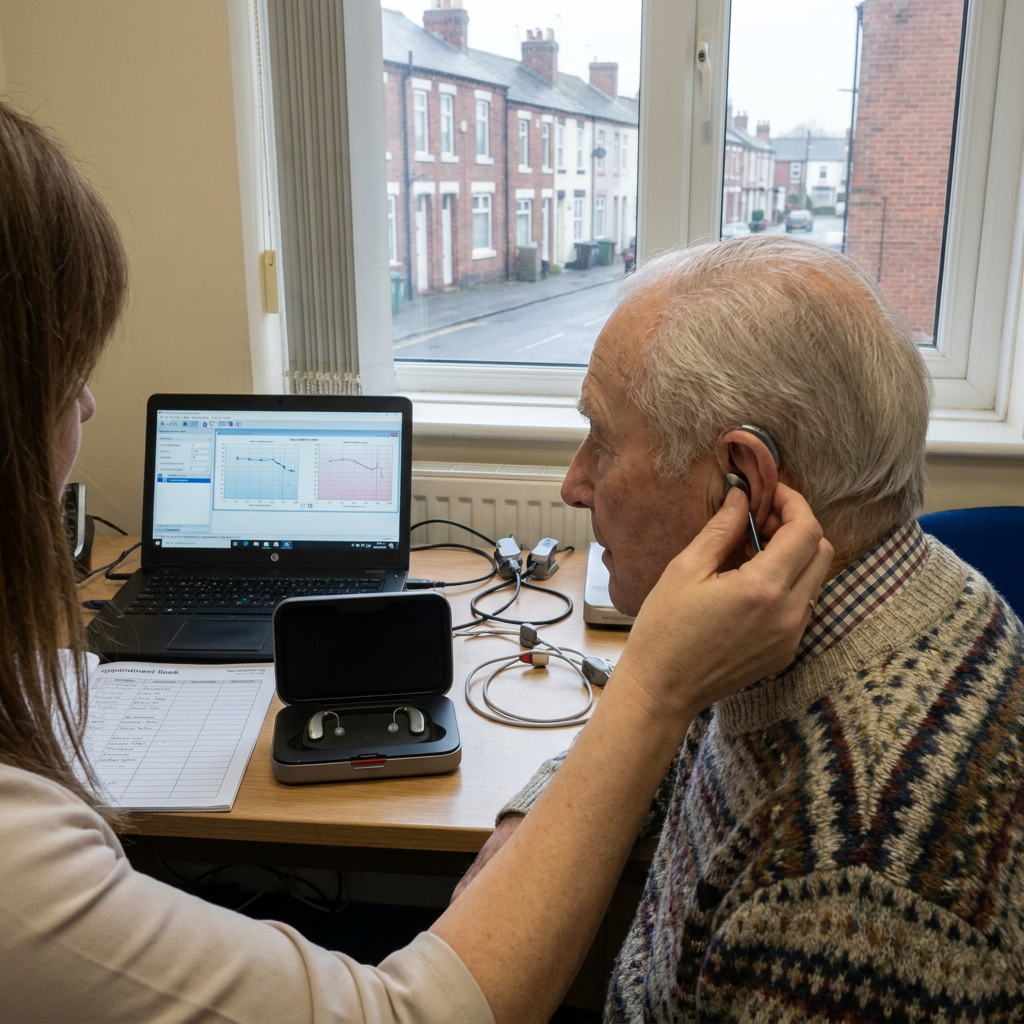
Every appointment differs because each person's hearing history, symptoms and needs shape the time and equipment required.
- Type of test needed
- A basic screening takes less time than a full diagnostic assessment covering multiple frequencies.
- Wax removal beforehand
- If wax blocks the canal, it must be cleared before accurate readings are possible.
- Follow-up requirements
- Some results need a second session to confirm findings or fit devices.
The specialist explains the cost of your particular appointment before anything is agreed.
Questions about booking a hearing test
Common things people in Southend-on-Sea ask before deciding to book an appointment.
- Repeating yourself often
- Asking people to repeat themselves regularly is a clear reason to book a test and establish a baseline.
- Television volume disputes
- If others find your television loud while it sounds fine to you, a test clarifies whose ears have shifted.
- Wax versus hearing loss
- Muffled hearing can be wax rather than permanent loss. A test distinguishes between the two.
- Age for a first check
- There is no fixed age, but a baseline test around fifty gives a useful reference point.
- Slow changes going unnoticed
- Hearing declines gradually. Routine checks catch shifts you have adapted to without realising.
- GP or audiologist first
- For hearing concerns, an audiologist has the right equipment. A GP visit is unnecessary unless infection is suspected.
Send an enquiry about a hearing test
Your details go to a local specialist who handles hearing enquiries in Southend-on-Sea. Sending an enquiry does not commit you to an appointment or any payment.
- No obligation to book
- Local specialists only
- Clear next steps