Practical guide
How to soften ear wax before removal
Find out how many days drops take to work, whether olive oil or pharmacy products are better, what never to put inside your ear, and why the clinician checks it first.
Why softening wax before microsuction matters
When you book ear wax removal in Southend, the specialist will usually ask you to prepare the ear at home. Learning how to soften ear wax is the first step because hard, dry wax grips the canal walls tightly. Trying to remove it without preparation makes the job harder and less comfortable.
Drops loosen the mass so the clinician can lift or suction it away cleanly. Softening wax before microsuction or syringing means the appointment takes less time and causes less irritation. The specialist doing the work relies on this preparation to see clearly and work safely around the delicate structures of your ear.
Olive oil ear drops and how long to use them
People often wonder about olive oil ear drops and how long they need applying. Most specialists advise using them for three to five days before the appointment. Two or three drops go into the affected ear twice a day. You do not need to warm the oil; room temperature is fine, since hot liquid risks burning the canal.
Pharmacy drops work in much the same way. Some contain sodium bicarbonate or hydrogen peroxide to break up the build-up faster. There is no single best ear drop for wax that suits everyone. If your skin is sensitive, plain olive oil may be gentler. How long for ear drops to work depends on how dense the blockage is, but three days is the usual minimum the specialist asks for.
What not to put in your ear
A cotton bud blocked ear is a frequent reason people seek help. Pushing anything into the canal packs the wax deeper against the eardrum. Read more about why cotton buds and ear wax cause problems on our advice pages. Ear candles are another thing to avoid entirely. They do not draw wax out and carry a real risk of burns or leaving candle residue behind.
If you suspect your eardrum has a hole, do not put any drops in at all. Liquid passing through a perforation can reach the middle ear and cause infection. Tell the specialist when you book, so they can decide whether to proceed or refer you elsewhere.
The examination before anything happens
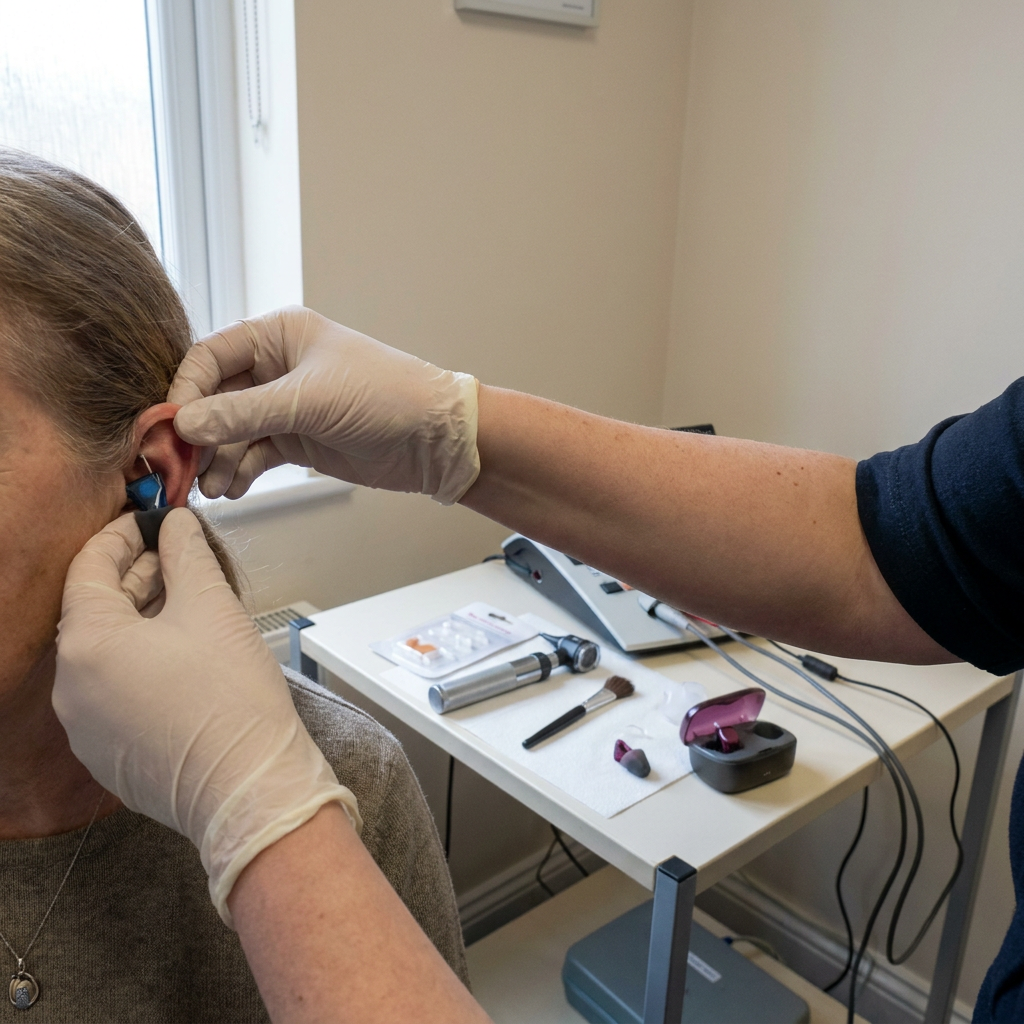
The clinician looks inside your ear before removing anything. They use an otoscope to check the canal is clear of infection, the eardrum is intact, and the blockage is actually wax rather than fluid from a cold. This examination dictates which method they use.
If you have not used any drops, the appointment might still go ahead, but the wax could be too stubborn to shift comfortably. The specialist may send you home with instructions to try again after a few days of preparation. It saves you sitting through a procedure that cannot be finished properly.
When wax has already dulled your hearing
Wax pressing against the eardrum mutes sound. You might notice conversations dropping out, or struggle to follow speech in a busy pub. If the dullness came on suddenly, wax is a likely culprit. A hearing test in Southend-on-Sea will separate a simple blockage from something that needs longer-term attention.
Once the specialist clears the wax, hearing usually returns immediately. If things remain muffled afterwards, that points to a different issue. An audiologist in Southend-on-Sea can run a full check to find out what is happening and whether hearing aids in Southend-on-Sea would help.
Preparing your ears for the appointment
- 1
Start drops early
Apply olive oil or pharmacy drops twice daily for three to five days before your visit to the specialist clinic.
- 2
Keep ears dry
Avoid swimming or letting shower water force more moisture into the blocked canal while the drops are working.
- 3
Attend the appointment
The specialist examines your ear, confirms the wax is soft enough, and removes it safely using their chosen method.
Questions about preparing for wax removal
- Skipped the drops entirely
- Tell the specialist on arrival. They will examine the ear and decide if the wax is soft enough to remove safely or if you should return later.
- Using drops with a perforation
- Do not use any drops if you suspect a hole in your eardrum. Liquid can enter the middle ear. Mention this when booking your appointment.
- Choosing between oils and chemist drops
- Both work well. Olive oil is gentle. Pharmacy drops containing peroxide act faster but can irritate sensitive skin. Ask the specialist if unsure.
Ask about ear wax removal in Southend
Send your details and the local specialist firm will contact you to arrange an appointment. Enquiring does not commit you to a booking or a fee.
- No obligation to book
- Local specialist firms
- Quick response