Guide
Can hearing loss be reversed? What treatment can do
Some causes of hearing loss settle on their own, while others are permanent. Find out which types reverse naturally, what treatment can achieve, and when hearing aids become the practical choice for daily life.

Temporary blockages that clear up
A blocked ear after a cold often mutes sound without damaging anything inside. Fluid trapped behind the eardrum stops vibrations from passing through properly, so voices sound distant or muffled. Once the congestion drains, hearing usually returns to normal within a few days.
Ear wax behaves similarly. When it builds up against the eardrum, it blocks sound waves physically. Softening drops can loosen the plug at home, but stubborn build-ups need professional removal. An audiologist uses microsuction or syringing to clear the canal safely. You can read more about [ear wax removal in Southend](/ear-wax-removal-southend-on-sea) if your ears feel blocked and you want to know what the appointment involves.
Middle ear infections also cause temporary hearing dips. The infection fills the space behind the eardrum with fluid, dulling everything you hear. Most cases resolve as the body fights off the bacteria or virus, though persistent infections sometimes need medical attention. [Ear infections and hearing loss](/insights/ear-infections-and-hearing-loss-what-usually-happens) tend to follow this pattern: the problem is mechanical rather than structural, so once the fluid goes, the hearing comes back.
When damage to the inner ear is permanent
The inner ear contains thousands of tiny hair cells that convert sound vibrations into electrical signals for the brain. Once these cells bend or break, they do not grow back. Age, prolonged exposure to loud noise, and certain medications all damage them over time.
This type of hearing loss is called sensorineural. It cannot be reversed by medication, surgery, or waiting. A [hearing test](/hearing-tests-southend-on-sea) measures exactly how much sensitivity has been lost and at which frequencies. The audiologist plays tones through headphones and records the quietest sounds you can detect across the pitch range.
Knowing the degree of loss matters because it determines what will actually help. Mild losses might only affect conversations in busy rooms, while severe losses make everyday speech difficult even in a quiet house. If you notice yourself [struggling to follow speech in a noisy pub](/ears-playing-up/cant-hear-in-noisy-pubs), that is often an early sign of high-frequency sensorineural loss. The background noise masks the consonants you rely on to separate words.
What treatment can realistically achieve
Treatment depends entirely on the cause. For conductive problems like fluid or wax, removing the obstruction restores hearing. For sensorineural loss, no current treatment repairs the damaged hair cells. Research continues into gene therapies and stem cell treatments, but nothing is available clinically yet.
Steroid injections sometimes help sudden sensorineural hearing loss if administered within days of onset. This condition, where hearing drops sharply in one ear without warning, requires urgent medical assessment. The steroids aim to reduce inflammation around the auditory nerve before permanent damage sets in.
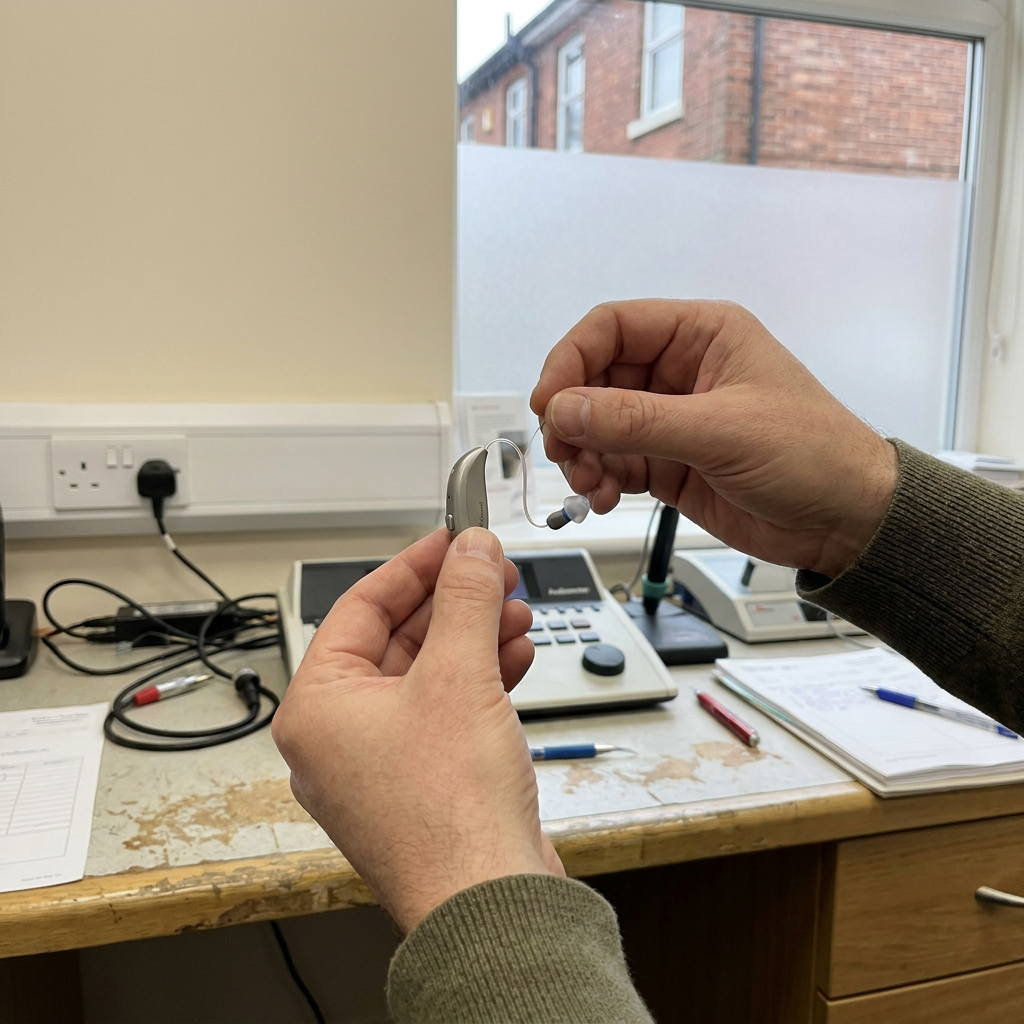
For gradual age-related or noise-induced loss, amplification is the standard approach. Hearing aids do not restore natural hearing. They process incoming sound, boost the frequencies you struggle with, and deliver clearer signals to your remaining hair cells. An [audiologist in Southend](/audiologist-southend-on-sea) checks whether your loss suits amplification and recommends specific devices based on your audiogram results and daily routines.
How hearing aids compensate for permanent loss
Modern hearing aids are small computers tuned to your exact audiogram. They amplify soft sounds while leaving loud ones alone, so you hear whispers without wincing at traffic noise. Directional microphones focus on whoever is speaking in front of you, reducing the effort of listening in crowded spaces.
Fitting matters as much as the technology itself. A poorly adjusted device causes feedback, discomfort, or unnatural sound quality. Specialist firms handle the programming, physical fitting, and follow-up adjustments over several weeks. You can explore the [hearing aids available in Southend-on-Sea](/hearing-aids-southend-on-sea) to understand the styles, from invisible-in-canal models to behind-the-ear units.
Choosing between battery-powered and rechargeable models affects daily convenience. Rechargeable aids sit in a charging case overnight, eliminating fiddly battery changes. Read about [hearing aid batteries versus rechargeable](/insights/hearing-aid-batteries-or-rechargeable-which-to-pick) options before deciding which suits your routine. Either way, consistent use trains the brain to interpret amplified signals naturally again.
Deciding whether to get tested
Uncertainty is the main reason people delay. You might wonder whether the muffled feeling is just tiredness, a passing cold, or something lasting. A hearing test removes the guesswork. It takes under an hour and produces a clear picture of what each ear can and cannot do.
Certain signs point toward testing sooner rather than later. Turning the television louder than others prefer, asking people to repeat themselves frequently, or withdrawing from conversations because following them feels exhausting are all common indicators. [Signs you need a hearing test](/ears-playing-up/do-i-need-a-hearing-test-southend-on-sea) include these behavioural shifts alongside physical symptoms like ringing in the ears.
Tinnitus often accompanies hearing loss. The brain generates phantom sounds to fill the frequencies it no longer receives from the ear. Understanding [ringing in the ears and its causes](/ears-playing-up/ringing-in-ears) helps separate harmless tinnitus from symptoms needing investigation. Whether the loss proves temporary or permanent, knowing the facts lets you act instead of worrying.
Ask about a hearing test in Southend
Send your details and a specialist firm will respond about availability. There is no obligation to book or buy anything. Enquiries stay private.
- No obligation to proceed
- Local specialist firms
- Private and secure